XXIII FIT World Congress (2025)
Mastering the Machine: Shaping an Intelligent Future
4–6 September 2025 | WIPO Headquarters, Geneva, Switzerland
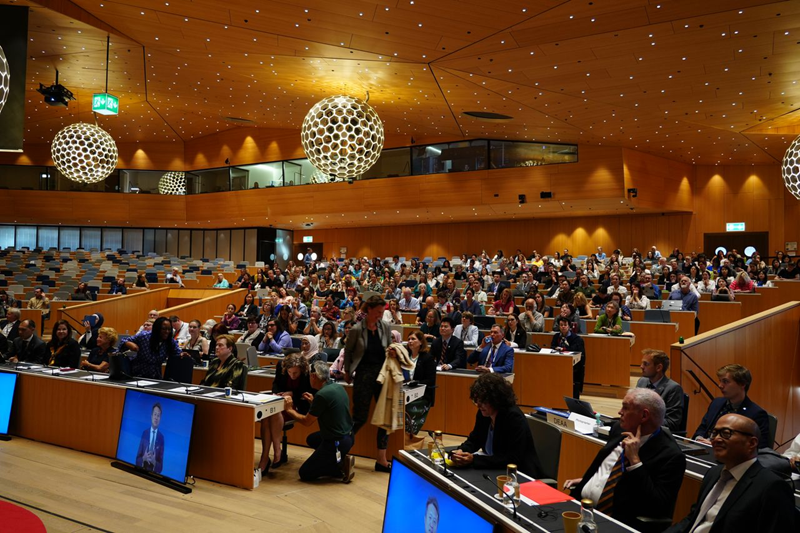
The XXIII World Congress of the International Federation of Translators (FIT) was held from 4 to 6 September 2025 at the headquarters of the World Intellectual Property Organization (WIPO) in Geneva. Under the theme “Mastering the Machine: Shaping an Intelligent Future,” the congress examined how artificial intelligence and technological innovation are transforming translation, interpreting, and terminology, while reaffirming the indispensable role of human expertise.
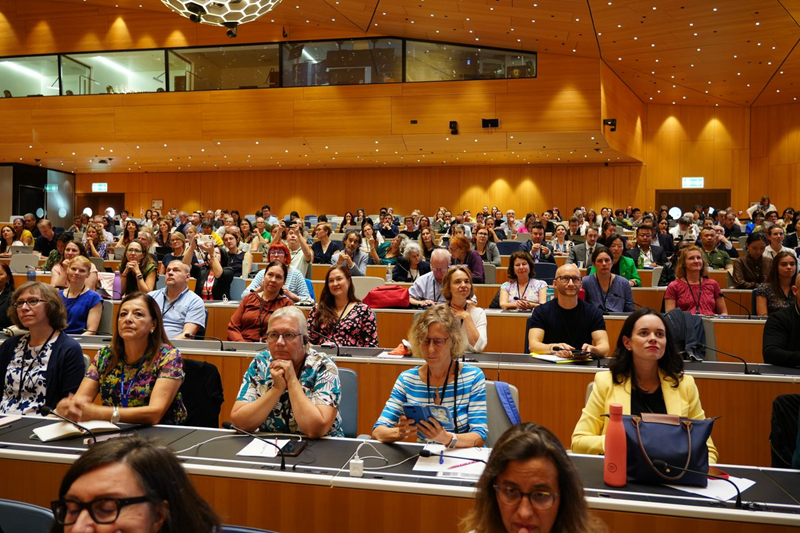
As FIT’s flagship triennial event, the three-day congress brought together around 400 language professionals from across the globe. The programme featured keynote lectures, parallel thematic sessions, panel discussions, an exhibition, networking opportunities, and the FIT Awards ceremony, which recognized outstanding contributions to the profession.
The congress opened with a keynote address by Daren Tang, Director General of WIPO, who highlighted the role of intellectual property in fostering innovation and creativity, as well as WIPO’s extensive multilingual operations, including translation, interpretation, and AI-powered tools such as WIPO Translate and WIPO Pearl.
Read More
The Artificial Intelligence keynote was delivered by Dorothea Baur, expert in ethics and technology, who addressed the ethical tensions that arise when machines “speak for us and about us.” She called for responsible, human-centred AI governance grounded in transparency, accountability, and social responsibility.
In the field of Audiovisual Translation, Ana Guerberof-Arenas (University of Groningen) presented research from the EU-funded CREAMT project and the ERC-funded INCREC project, examining creativity in literary and audiovisual translation and the impact of machine translation on the creative process.
Anton Hur, internationally acclaimed literary translator and author, explored the relationship between AI, data, and literary taste in his keynote, questioning the capacity of machine learning systems to capture aesthetic appreciation and human judgment.
Marija Todorova, Assistant Professor at the Education University of Hong Kong, examined AI and equitable inclusion, presenting research on linguistic diversity in humanitarian contexts and raising critical questions about the representation of “small” and marginalized languages in digital technologies.
The congress concluded with a keynote by Lucio Bagnulo, Deputy Programme Director and Head of Translation and Language Strategy at Amnesty International. His presentation examined how Amnesty International strategically integrates artificial intelligence to enhance multilingualism and support global human rights advocacy. Central to this approach is the purposeful use of machine translation (MT) and terminology management tools to assist human language professionals and the broader Amnesty Movement. Machine translation plays a dual role: as an assistive technology enhancing human translation efficiency and as a standalone application enabling agile multilingual content dissemination, particularly in crisis response management. The presentation highlighted the strategic synergy between AI systems and human expertise, demonstrating how this integration enhances translation accuracy, operational sustainability, and global accessibility, ultimately strengthening Amnesty International’s commitment to multilingual human rights advocacy.
Finally,
The congress revolved around five core themes:
The congress revolved around five core themes:
- Artificial Intelligence and Technology
- The Humanities
- Audiovisual Translation and Accessibility
- Literary Translation and Copyright
- Indigenous Languages, emphasizing revitalization, preservation, and cultural knowledge
Together, these themes underscored the profession’s dual responsibility: to embrace technological transformation while safeguarding ethical standards, cultural diversity, and linguistic heritage.
Hosted at WIPO, a specialized agency of the United Nations, and set against the backdrop of Lake Geneva and the Alps, the XXIII FIT World Congress provided a unique global forum for reflection, collaboration, and forward-looking dialogue on the future of the language professions.
Looking Ahead
Set against the backdrop of Lake Geneva and the Alps, the XXIII FIT World Congress provided a dynamic global forum for reflection, exchange, and strategic dialogue on the future of the language professions in an era of accelerating technological change. In 2028, Lima will become the global meeting point of the translation profession, continuing the dialogue initiated in Geneva and shaping the next chapter in the evolving relationship between technology and human expertise.
Set against the backdrop of Lake Geneva and the Alps, the XXIII FIT World Congress provided a dynamic global forum for reflection, exchange, and strategic dialogue on the future of the language professions in an era of accelerating technological change. In 2028, Lima will become the global meeting point of the translation profession, continuing the dialogue initiated in Geneva and shaping the next chapter in the evolving relationship between technology and human expertise.

 by
by